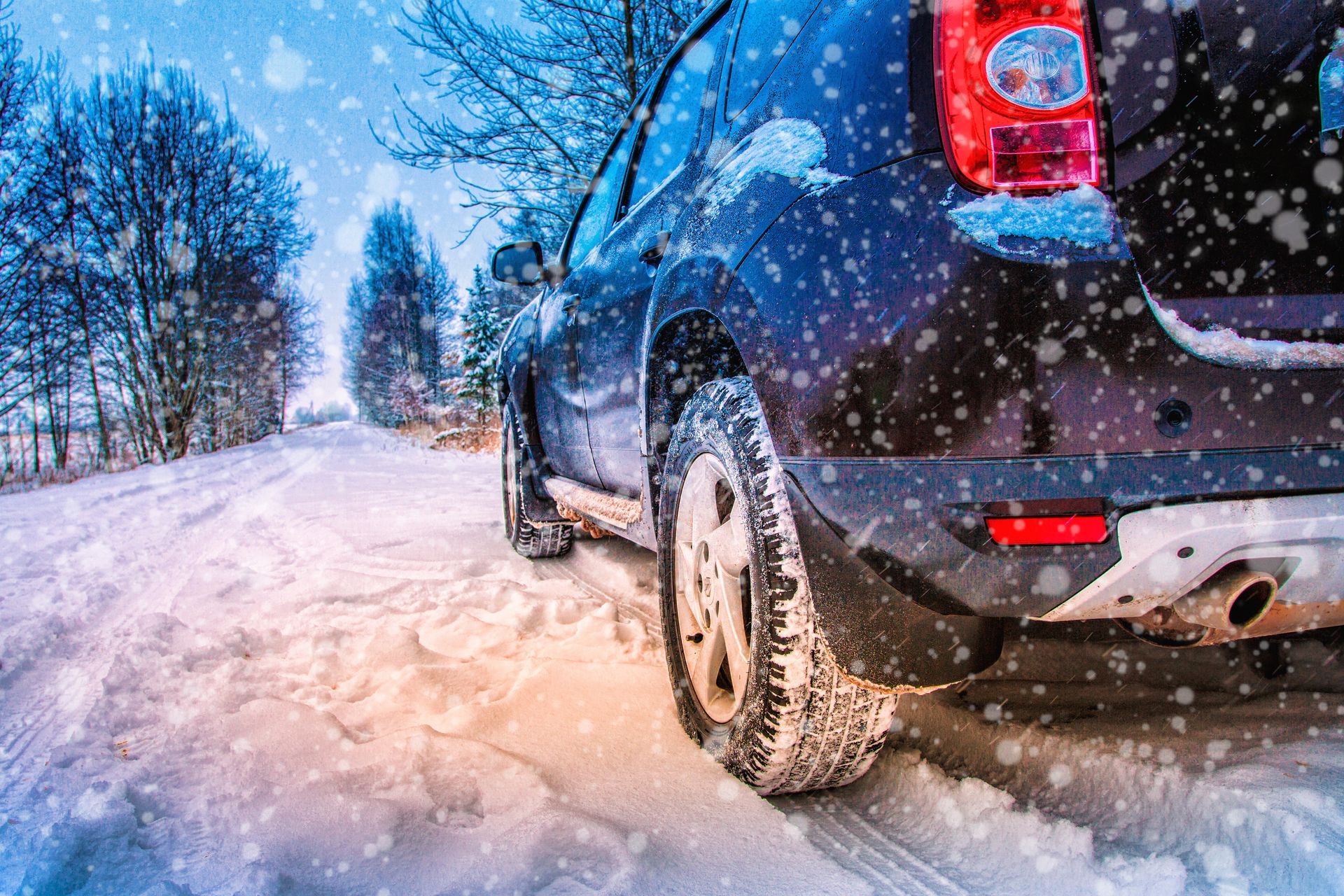
All-wheel drive and four-wheel drive help you move, but they do not change how rubber grips cold pavement. Many drivers in Lombard assume that AWD is the solution to winter driving on its own. The truth is more nuanced.
Tires decide how well you accelerate, steer, and stop, and winter compounds behave very differently once temperatures drop.
AWD vs. Winter Tires
AWD and 4x4 systems distribute engine power to more wheels. That helps you get going and reduces wheelspin when the road is slick. Tires provide traction. Their job is to maximize grip during acceleration, braking, and cornering.
If the rubber is hard from the cold, it cannot bite the pavement. AWD can help you launch, but it cannot shorten your stopping distance when the light turns red. That is where winter tires earn their keep.
Why Winter Rubber Works Better in the Cold
Tire compound is chemistry. All-season tires are a compromise that firms up as temperatures fall. Below about 45°F, many of them get stiff and lose the ability to conform to microtexture in the road surface. Winter tires utilize a softer compound that remains flexible in cold temperatures. The tread has more sipes, which are tiny slits that open under load and create more edges to grab snow and ice.
On clear but cold roads, that flexible rubber still makes a difference because it can press into the pavement instead of skimming over it.
Stopping Distance: The Number That Matters The Most
Getting unstuck is nice. Stopping before a crosswalk is what keeps you out of trouble. Instrumented tests regularly show that a vehicle on winter tires stops shorter on snow and ice than the same vehicle on all-seasons, even when the all-season car has AWD and the winter-tire car is only front or rear drive.
The gap grows as temperatures fall and snow compacts into a slick layer. If your winter driving includes early commutes, school drop-offs, or late returns after the roads glaze over, the shorter stop is the advantage you actually feel.
When All-Seasons Are Good Enough
Not every driver needs a second set of tires, and we will tell you when you can skip them.
If your winter driving is light, your routes are plowed quickly, and you can stay home during storms, a high-quality all-season with plenty of tread may be enough. Keep in mind that worn all-seasons lose winter performance quickly once they dip below about 5/32 inch.
If you are on the fence, consider an all-weather tire, a newer category that carries the three-peak mountain snowflake rating and works better in cold than standard all-seasons while still serving year-round.
Size, Pressure, and Practical Setup Tips
- A winter setup works best when it is planned.
- Many SUVs benefit from a slightly narrower winter tire size to cut through slush more effectively.
- Mount winter tires on dedicated wheels so seasonal changeovers are quick and your nice wheels avoid salt.
- Set pressures when the tires are cold and the vehicle is in the same conditions you will drive in. Pressure drops about 1 psi for every 10°F of temperature drop, so recheck after a cold snap.
- Rotate winter tires on schedule, since the softer compound can wear faster on long, dry stretches.
What About Ice Specifically
Nothing turns a road into a skating rink like black ice after a melt and refreeze. Winter tires improve grip on ice compared to all-seasons because their compound and siping work at low temperatures.
That said, they are not magic. Leave extra space, brake early, and keep steering smooth. If you live on a steep driveway or a shaded side street that ices often, winter tires paired with careful inputs feel like a different vehicle.
Cost, Storage, and Longevity
Buying a second set sounds expensive until you look at the whole picture. When winter tires are on, your all-season or summer set is not wearing. You split the miles between two sets, which extends the life of both. Seasonal changeovers are predictable and can be planned with other maintenance.
Storage takes a bit of space; a cool, dry basement or garage rack works well, and we can bag and label each wheel so the next swap is simple.
Get Winter Tire Advice and Installation in Lombard, IL, with Pit Shop Auto Repair
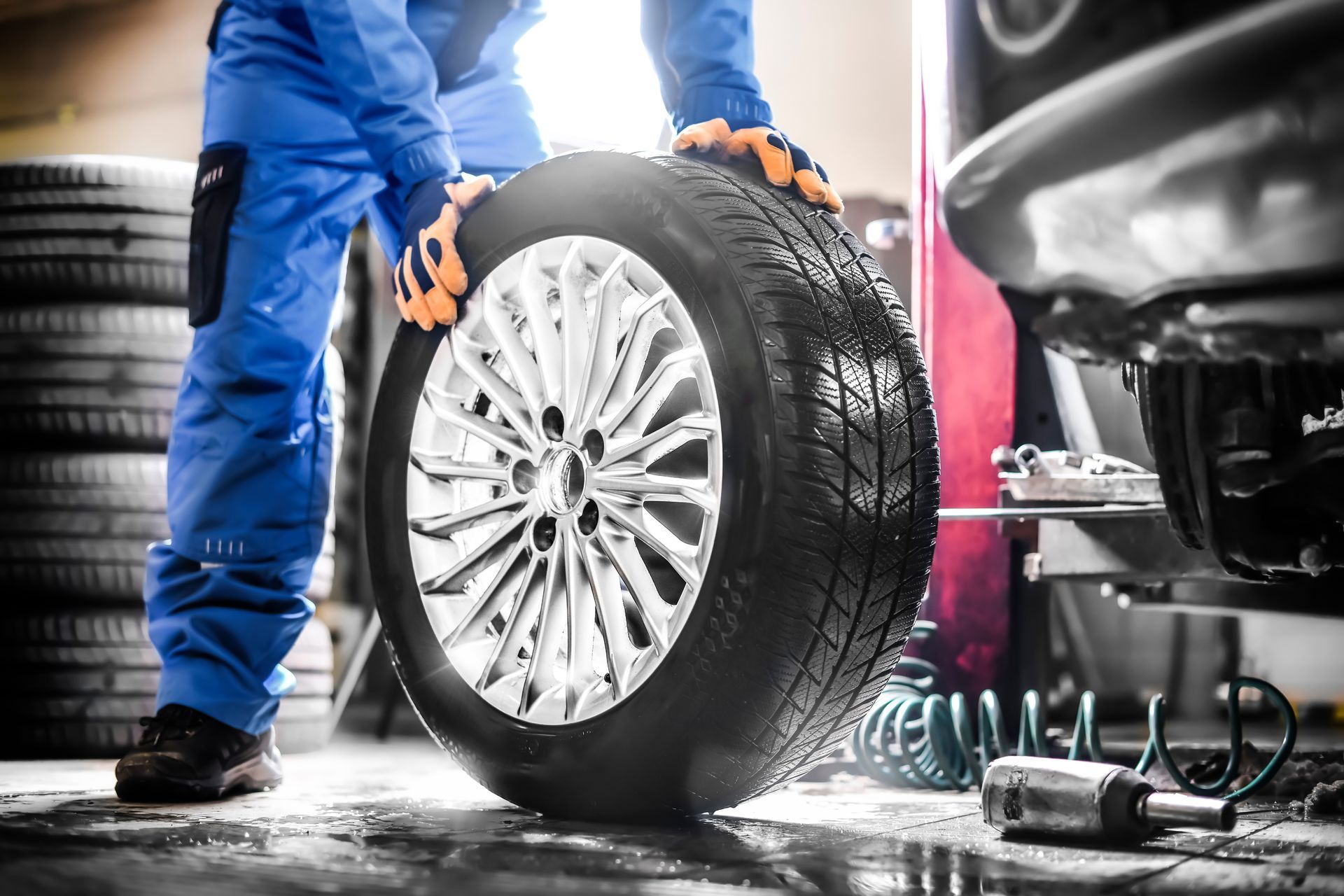
Not sure which way to go for your SUV? Stop by our Lombard shop. We will look at your route, mileage, and wheels, recommend the right winter or all-weather setup, mount and balance the set, and set pressures for your real-world load.
Leave with traction you can trust when temperatures drop.